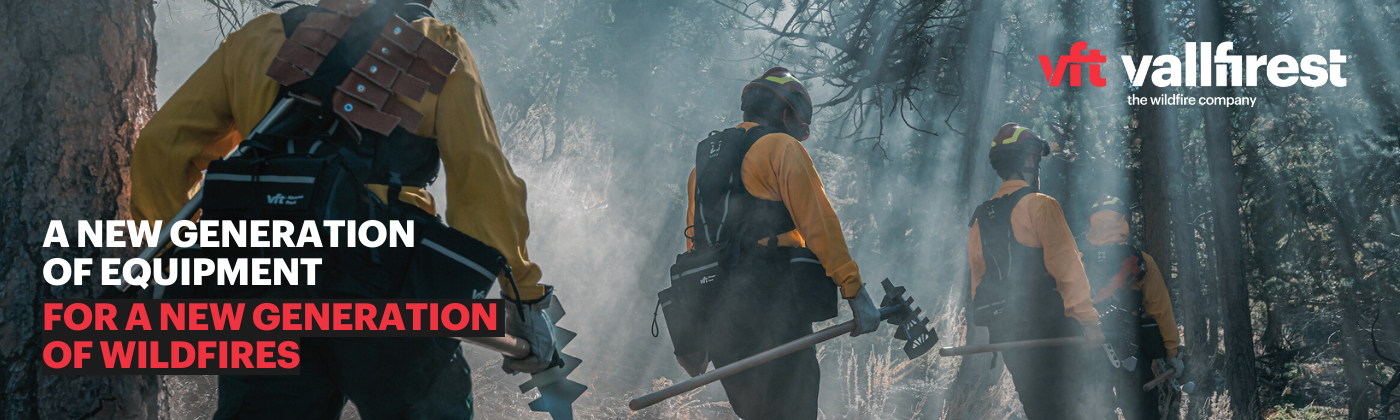
"Empowering Excellence, Uniting Expertise: Igniting Tomorrow's Fire Practitioners"
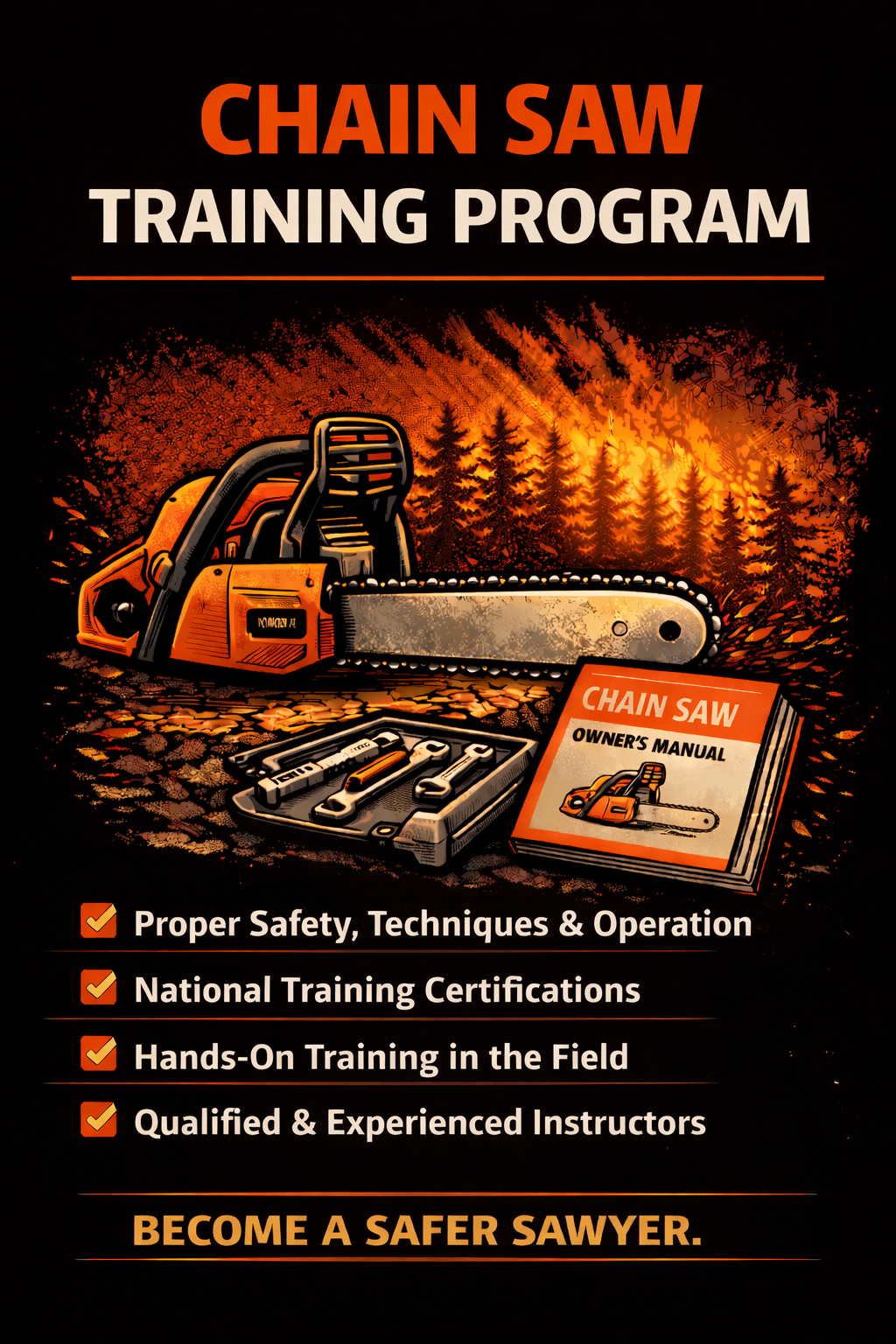
S-112, Introduction to Chainsaw Operations:
COURSE DESCRIPTION:
This course is designed to provide students with the knowledge and skills to perform the duties of the Basic Faller (FAL3) position, as described in the NWCG Standards for Wildland Fire Chainsaw Operations, PMS-212.
Online Training (OLT) Component: The focus of the online training is to teach knowledge and concepts. Students are required to complete the Online component of the course and pass the assessment prior to taking the Instructor-led component. The course lessons provide introduction to the function, maintenance and use of internal combustion engine powered chainsaws, and their tactical wildland fire application. The Online component should take approximately 4 hours to complete.
Instructor-Led Training (ILT) Component: The Instructor-led training will reinforce the content learned online and provide opportunities to apply this knowledge to real-world scenarios and practical exercises. Field exercises support entry level training for firefighters with little or no previous experience in operating a chainsaw, providing hands-on cutting experience in surroundings similar to fireline situations.
TARGET GROUP:
S-112, Introduction to Chainsaw Operations , S-112, is a required National Wildfire Coordinating Group (NWCG) training course for individuals desiring to be qualified as a Basic Faller (FAL3) in the National Interagency Incident Management System: Wildland Fire Qualification System Guide,PMS 310-1. It is a suggested course for individuals desiring to be qualified as a Firefighter Type 2 (FFT2) in the National Interagency Incident Management System: Wildland Fire Qualification System Guide, PMS 310-1.
PREREQUISITES:
Prerequisites for S-112 In-Person Days
Before attending the in-person portion of S-112: Introduction to Chainsaw Operations, students must complete the following:
✅ S-112 Introduction to Chainsaw Operations (Online Component) 2025
This courses is available online at no cost.
STEP 1: You will need to register for a WFIT account (Wildland Learning Portal). Click the button below, it will bring you to the login page hit create account, fill out your information and for the last questions answers are below.
- Agency: Contractor
- Unit: Healthy Forest Alliance
- Geographic Area: Pacific Southwest
STEP 2: Log in to Learning Portal go to "Find Learning" then to "Courses" and search for the courses listed below.
- S-112 Introduction to Chainsaw Operations (Blended-Online Component) 2025
STEP 3: Complete the online course and upload the Certificate in the "my Documents" area of the mebers portal.
Completion certificates must be uploaded to the "My Docs" area of your member profile on the Healthy Forest Alliance website prior to the first day of in-person training. These foundational courses are required to ensure you are prepared for safe chainsaw operation in a wildland fire environment.
Certification levels:
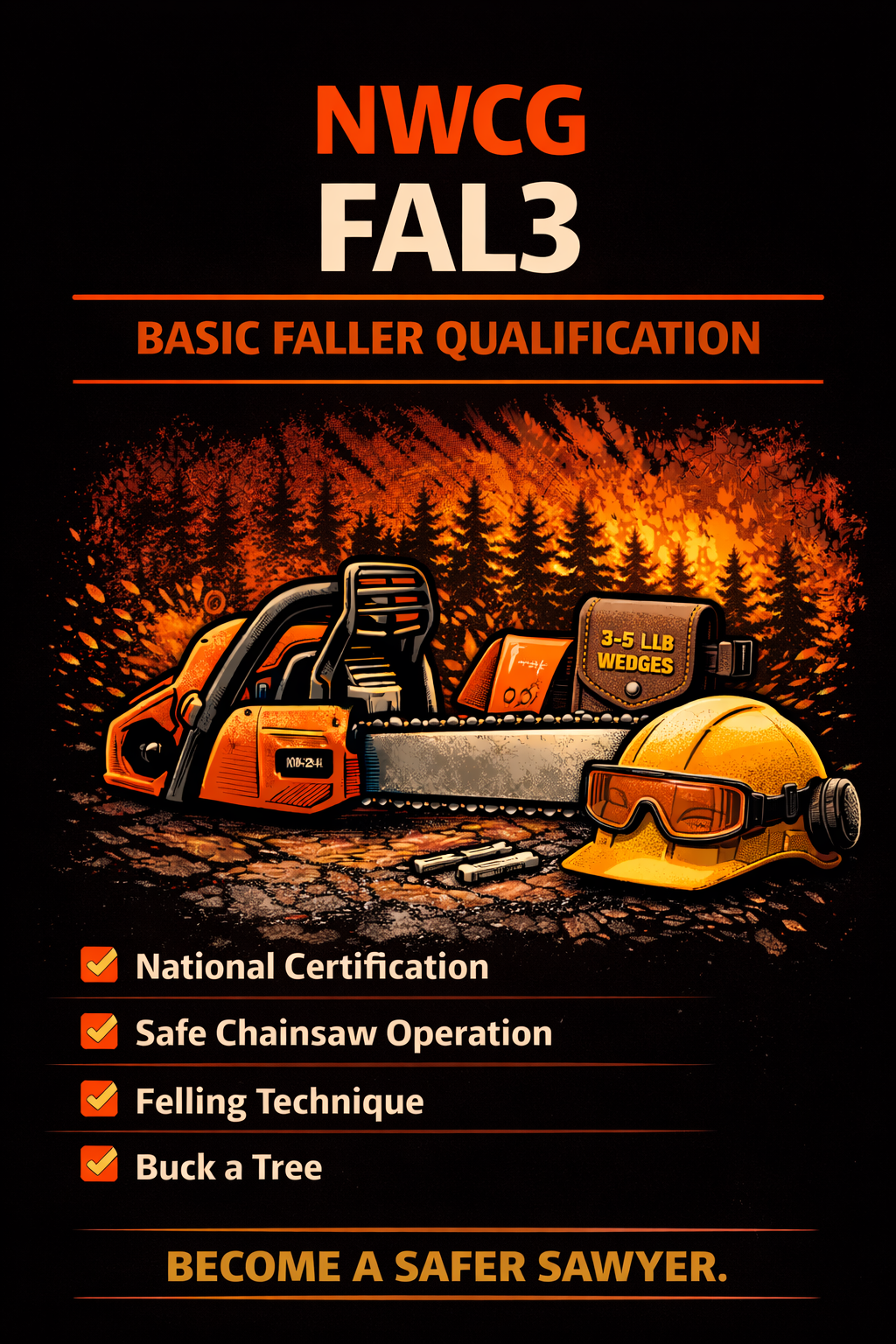
BASIC FALLER: FAL3
The Basic Faller (FAL3) is an entry-level chainsaw operator that serves as a member of a firefighting crew or module. The FAL3 engages in low complexity fireline saw operations, including tree felling, bucking, brushing, and limbing, and should be closely supervised during operations.
Required Training
- RT-130, Wildland Fire Safety Training Annual Refresher (WFSTAR)
- S-112, Introduction to Chainsaw Operations
Required Experience
- Satisfactory performance as a Firefighter Type 2 (FFT2)
- Completion and Certification of NWCG Basic Faller (FAL3) Position Task Book

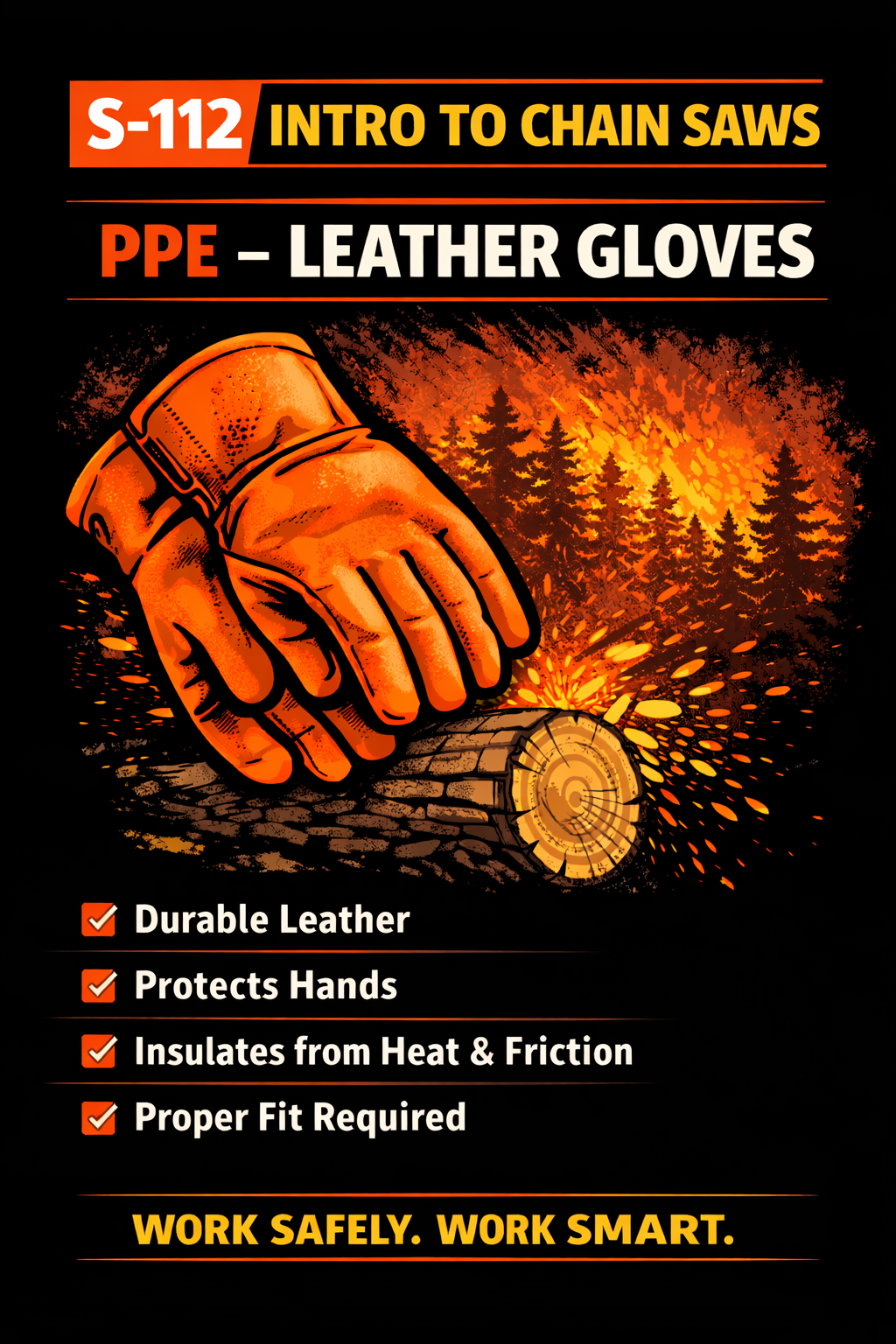
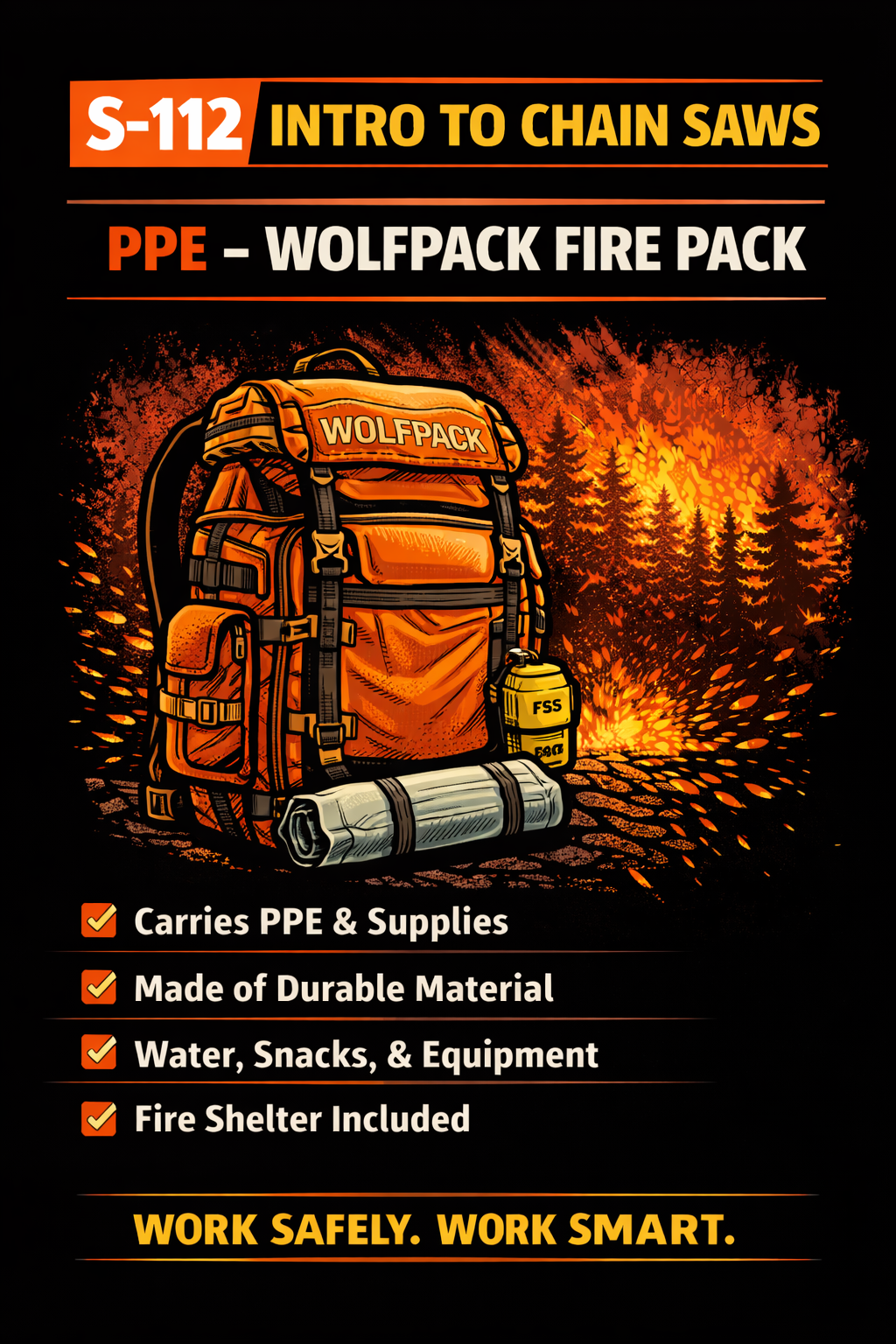
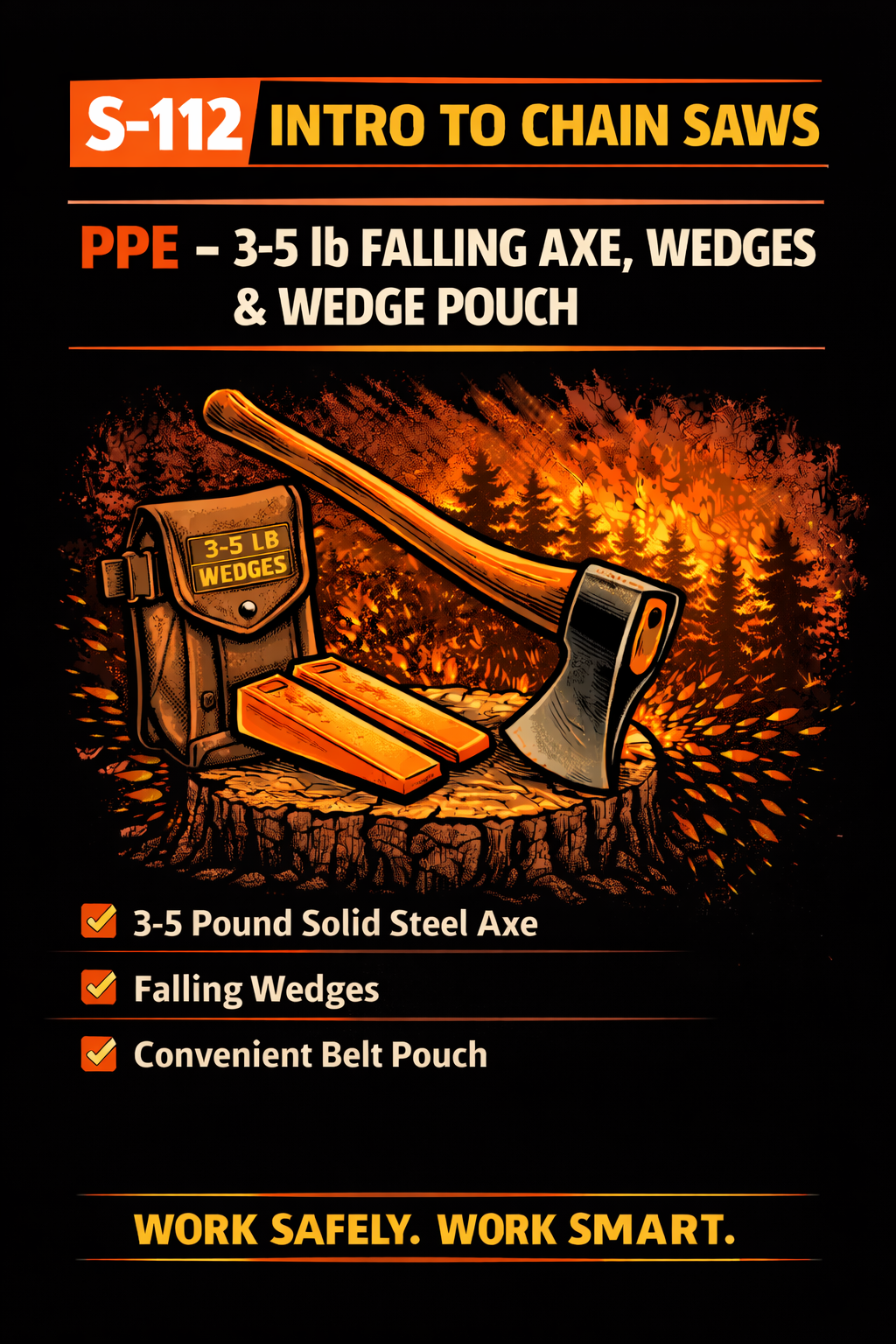
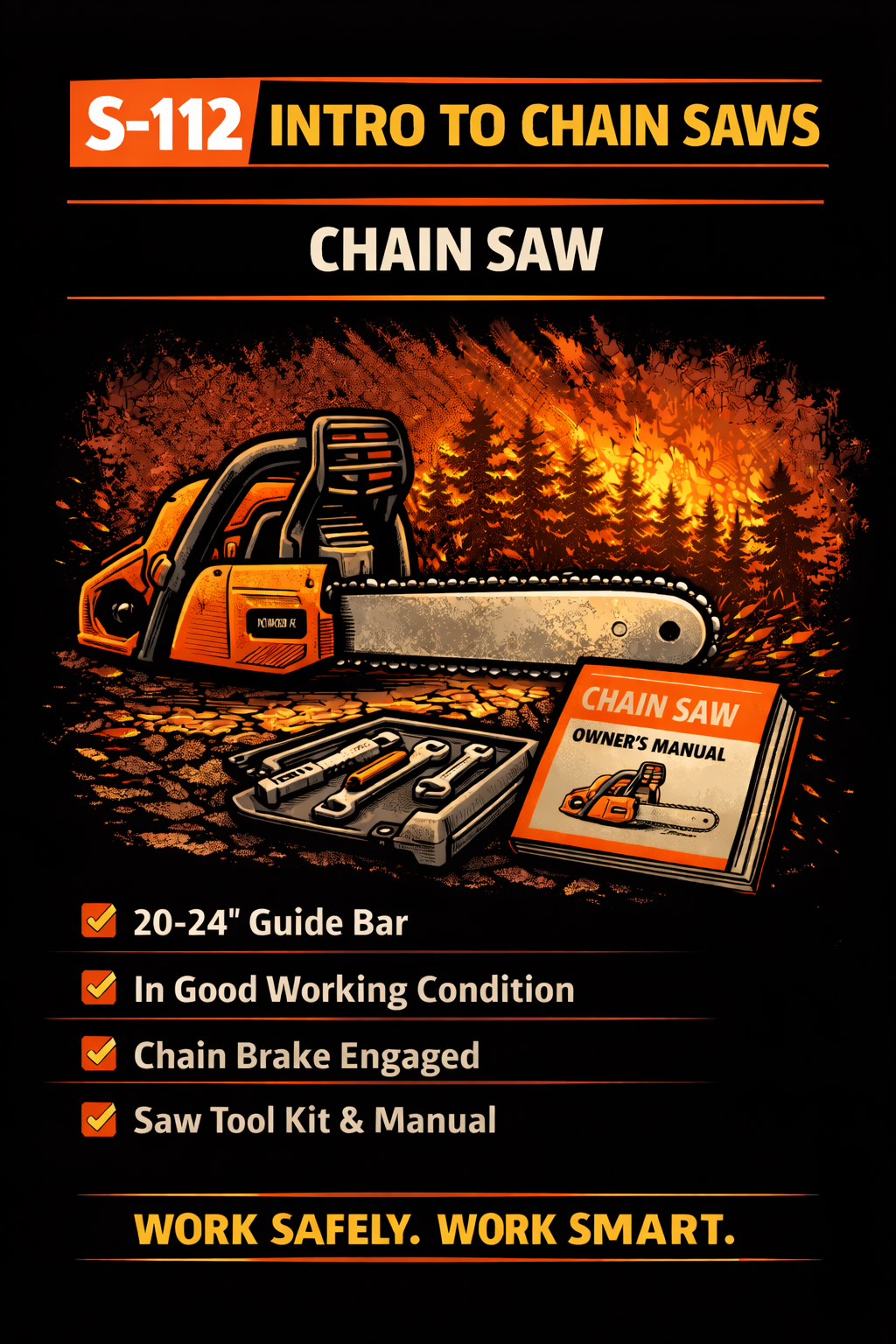
STUDENTS MUST BRING THE FOLLOWING TO CLASS:
REQUIRED MATERIALS FOR THE COURSE


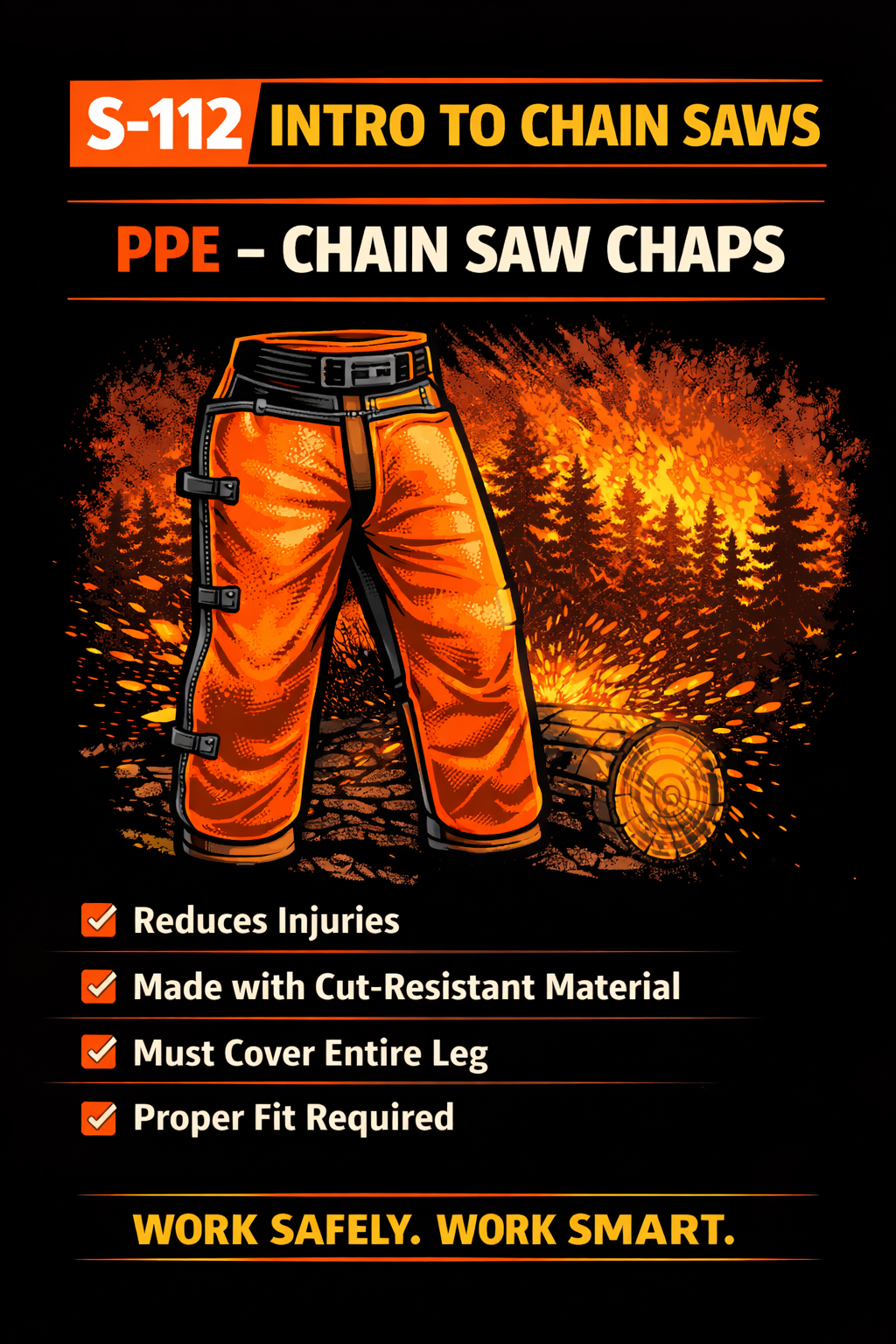
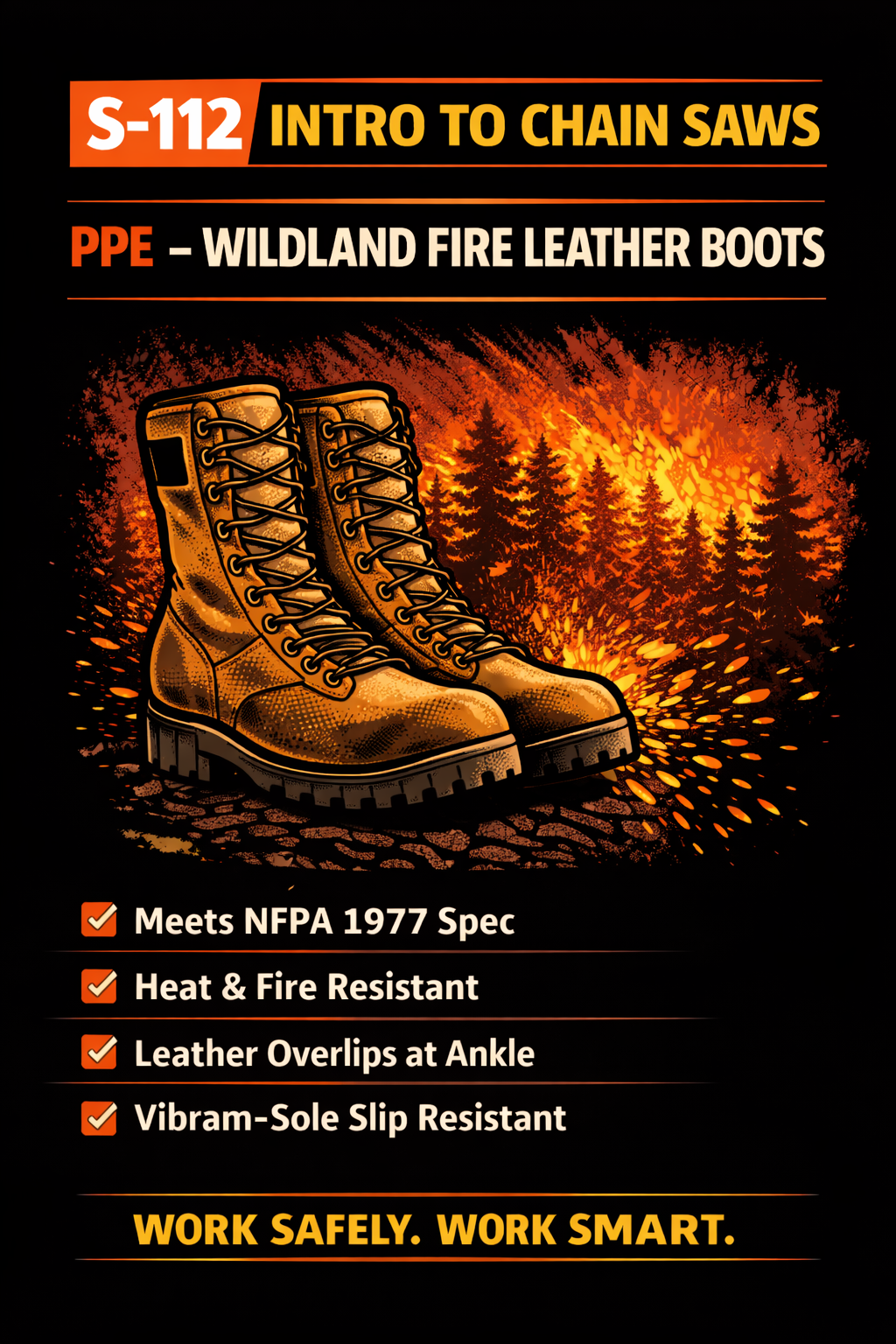
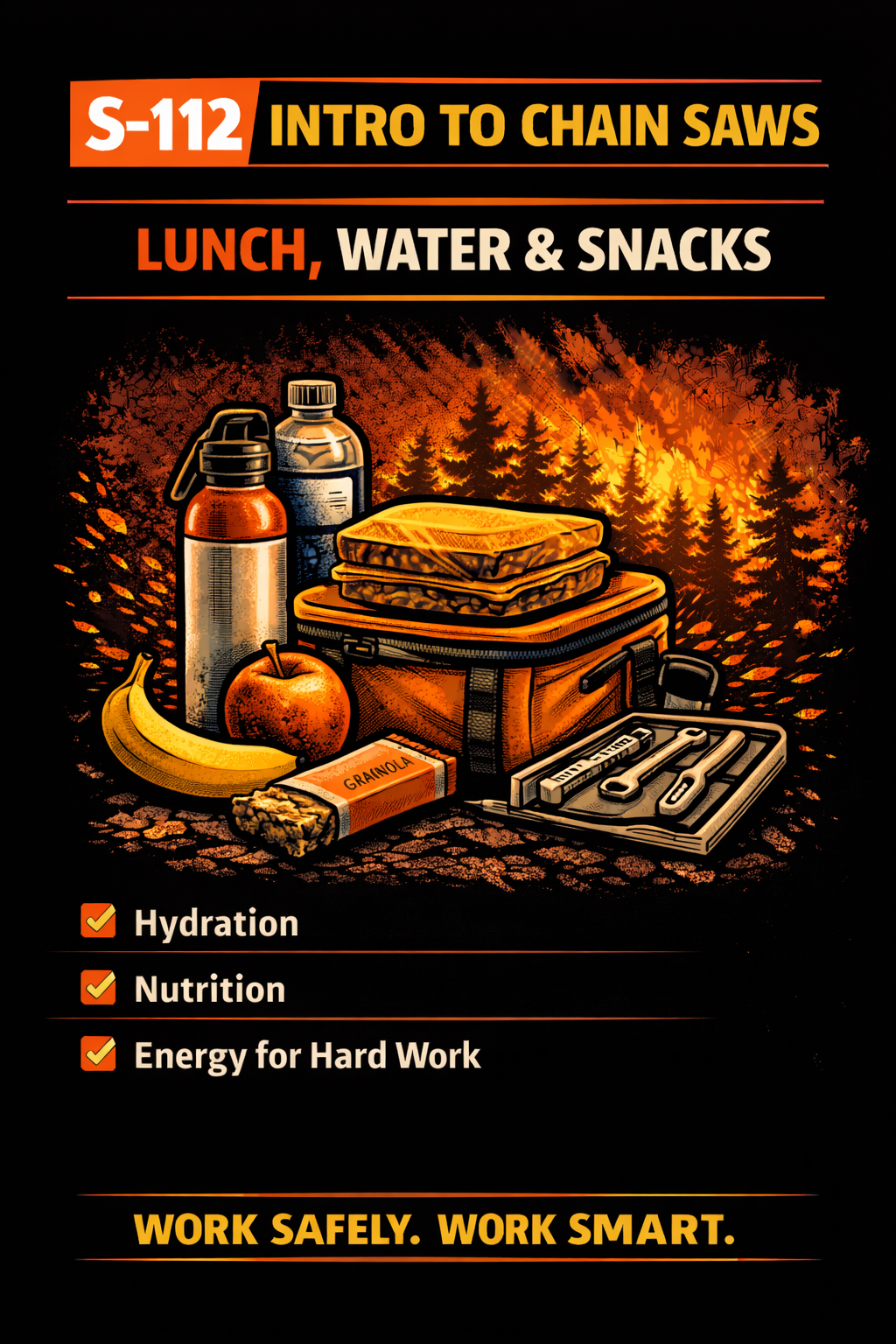
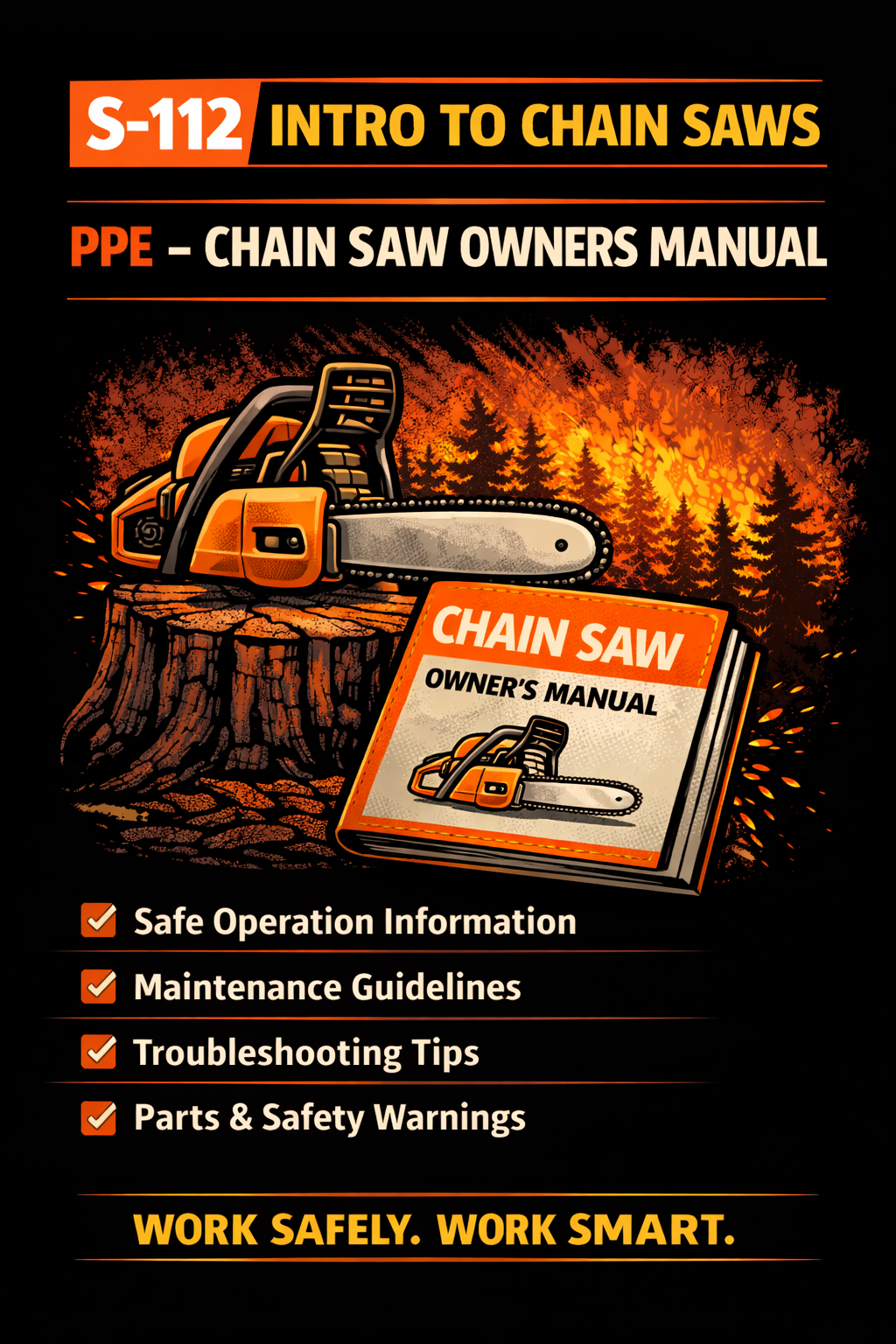
SCHEDULE FOR S-112 WILDLAND FIRE CHAIN SAWS
DAY 1
0800 - 1300
Morning Classroom Session:
Unit 0 – Introduction
Unit 1 – Safety Requirements .
Unit 3 – Fireline Construction and Mop Up
0800 - 1300
1300 - 1330
Lunch
1330 - 1800
Afternoon Classroom Session
Unit 2 – Chain Saw Parts, Maintenance, and Operation
Unit 4A – Chain Saw Tasks and Techniques: Handling, Bucking, Limbing, and Brushing and Slashing (in the classroom)
Unit 4C – Chain Saw Tasks and Techniques: Felling (in the classroom)
1330 - 1800
DAY 2
0800-0930
Morning Classroom Session:
Recap of Day 1 and Review of Key Concepts
Unit 4B – Chain Saw Tasks and Techniques: Handling, Bucking, Limbing, and Brushing and Slashing (Field Proficiency – introduction, in the classroom)
Unit 4D – Chain Saw Tasks and Techniques: Felling (Field Proficiency – introduction, in the classroom)
0800-0930
0930 - 1100
Travel To Field Location
1100 - 1330
Morning Field Session:
Overview of the Training Objectives and Goals
Safety Briefing and Equipment Check
Unit 4B – Chain Saw Tasks and Techniques: Handling, Bucking, Limbing, and Brushing and Slashing (Field Proficiency – in the field)
1100 - 1330
1300 - 1330
Lunch Break
1330 - 1700
Afternoon Field Session:
Unit 4B – Chain Saw Tasks and Techniques: Handling, Bucking, Limbing, and Brushing and Slashing (Field Proficiency – in the field)
1330 - 1700
1700 - 1800
Afternoon Field Session:
Clean Up and Saw Maintance
After Action Review
DAY 3
0800-0900
Morning Session: Introduction and Safety Procedures
Welcome and Introductions
Overview of the Training Objectives and Goals
Safety Briefing and Equipment Check
0800-0900
0900-1300
Unit 4D – Chain Saw Tasks and Techniques: Felling (Field Proficiency – in the field)
1300 - 1330
Lunch Break
1300 - 1330
1330 - 1730
Afternoon Session: Scenario-based Training
Unit 4D – Chain Saw Tasks and Techniques: Felling (Field Proficiency – in the field)
1730 - 1800
Afternoon Field Session:
Clean Up and Saw Maintance
After Action Review
1730 - 1800
UPCOMING TRAINING
Wildland Firefighter Type 2 Skills Days - Calaveras County
S-290, Intermediate Wildland Fire Behavior - Calaveras County
S-219, Firing Operations - With Live Fire Component
S-112 Introduction to Chainsaw Operations - Civicorps
S-112 Chainsaw Operations - Calaveras County
Please Support Our Corporate Members
LEARN MORE ABOUT PRESCRIBED FIRE AND HOW IT CAN BE USED TO PROMOTE HEALTHY FORESTS
FROM OUR BLOG
Please Support Our Corporate Members